
There are Six Primary steps involved in Data Science
- Ask
- Data Preparation
- Data Cleaning
- Exploratory Data Analysis
- Data Modelling
- Model Deployment
Before Studying the steps involved in data science, one should know What is Data Science.
Data science is defined as creating new ways of modeling and understanding the unknown by using raw data.
The Data Science lifecycle involves the following:
Ask

You need to pose the entirety of the right inquiries toward the start of the commitment so you better get what your chiefs and partners need from this examination. The sorts of inquiries that I for the most part pose are near, what is the issue that we’re attempting to settle? What is the reason for this examination? What are we wanting to gain from it? After you’ve posed the appropriate inquiries and you’ve folded your arms over the extent of the investigation you need to lead.
Data Preparation:

After business understanding, the subsequent stage is information understanding. This includes the assortment of the relative multitude of accessible information. It might be ideal on the off chance that you worked intimately with the business group to know what information is available and what information could be utilized for this business issue, and other data.
This progression includes depicting the information, their design, their importance, their information type. Investigate the information utilizing graphical plots. Fundamentally, extricating any data that you can get about the information simply by investigating the information.
Data Cleaning:
We can consider it the underlying presentation or the handshake, “hi”, to your information. This is the place where you get an opportunity to comprehend its construction, its characteristics, its subtleties, and you truly get an opportunity to see profoundly what kind of information you will be working with and getting what potential that information needs to respond to the entirety of your inquiries.
This is a particularly significant part where we’re going through the entirety of our quality confirmation checks. For instance, do we have the entirety of the information that we expected we would have? It is safe to say that we are missing information aimlessly or is it missing in an efficient manner to such an extent that possibly something turned out badly with our information assortment exertion?
If necessary, did we code the entirety of our information the correct way? Are there any anomalies that we need to treat unexpectedly? This is the part where we invest a great deal of energy truly delving profoundly into the construction and subtlety of the information to ensure that you’re ready to investigate it properly and capably.
Exploratory Data Analysis:
This progression includes finding out about the arrangement and components influencing it before building the real model. The main thing we do is go through a progression of examinations that we’ve effectively prepared of time dependent on the inquiries that we realize we need to reply from the extremely, start of the interaction.
One thing that is likely the hardest about this specific cycle, the hardest thing about examining information, is that we as investigators are prepared to search for designs. Over the long run, as we become better at our positions, we’ll regularly discover that we can begin to intuit what we may find in the information. We may have a sneaking doubt concerning what the information will advise us.
This is where we need to make a stride back and let the information justify itself with real evidence. As information investigators, we are narrators, yet we likewise need to remember that it isn’t our story to tell. That story has a place with the information, and it is our work as investigators to enhance and recount that story in as fair and target way as could really be expected.
Data Modeling:
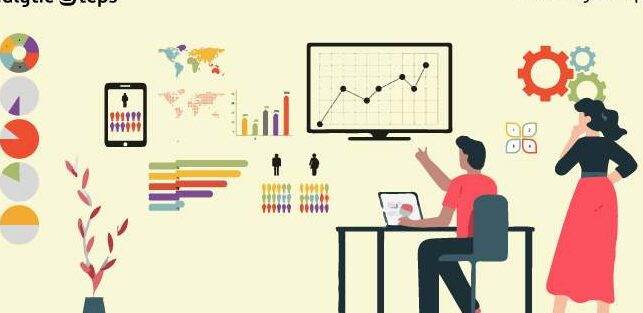
Information demonstrating is the core of information investigation. A model accepts the pre-arranged information as information and gives the ideal yield. This progression incorporates picking the fitting model, regardless of whether the issue is a grouping issue, a relapse issue, or a bunching issue.
After picking the model family, among the different calculations among that family, we need to pick the calculations to carry out and execute them cautiously. We need to tune the hyperparameters of each model to accomplish the ideal exhibition. We additionally need to ensure there is a right harmony among execution and generalizability. We don’t need the model to become familiar with the information and perform inadequately on new information.
Model Deployment:
The model, after a thorough assessment, is at last sent in the ideal arrangement and channel. This is the last advance in the information science life cycle. Each progression in the information science life cycle clarified above ought to be worked upon cautiously. If any progression is executed inappropriately, it will influence the following stage, and the whole exertion goes to squander.
For instance, in case of information isn’t gathered as expected, you’ll lose data, and you won’t construct an ideal model. In case information isn’t cleaned as expected, the model won’t work. On the off chance that the model isn’t assessed as expected, it will come up short in reality. From business comprehension to demonstrate arrangement, each progression ought to be given appropriate consideration, time, and exertion.
Does this field interest you? Or you feel like you will do amazing here. Start with any of the courses and boost up in this career
Data Science – K-means Learning
Data Visualization
Data Cleaning